Keeping cool helps birds raise bigger chicks
Maja Mielke
Blue tits that cope better with heat during parental care raise bigger chicks.
Raising chicks is an up-to-three-week-long marathon for small songbirds. With clutch sizes of 6-12 eggs or more, parents feed their offspring 30-60 times per hour, flying in and out of the nest literally hundreds of times every single day.
A little bird’s body can easily overheat to dangerous levels under the physical strain of their immense parental investment. Researchers Andreas Nord and Jan-Åke Nilsson from Sweden discovered1 that marsh tits feeding their nestlings can reach body temperatures of more than 45°C (113°F)2—more than three degrees above their normal daytime temperature and presumably close to their lethal threshold.

In another study3, this time on Eurasian Blue tits, Nord and Nilsson discovered that such overheating has consequences not only for the feeding parents themselves but also for the health of their offspring.
For this study, the researchers from Lund University divided a population of wild nestling-feeding Blue tits into two groups. In the treatment group, they clipped the feathers on the birds’ chests. These feathers cover the pectoral muscle—the muscle that powers flight and is the main producer of metabolic heat. Clipping these feathers made it easier for the birds to release excess metabolic heat during and after flight bouts, reducing the risk of overheating in the treatment group. In the control group, birds were handled similarly, but their plumage was left intact.

They measured the temperature and body mass of all birds one and two weeks after the chicks hatched, and also the body mass of the chicks at two weeks of age. When comparing the groups, they found that the birds of the control group (those without clipped feathers)
- had body temperatures that were 0.4 degrees higher
- had lost 2.4 times more body weight during the week between measurements
- had chicks that were smaller in size and sometimes had lower body mass
Why does clipping feathers help parents raise bigger chicks and maintain parental health? The open patch on the chest of the feather-clipped birds made it easier for them to cool down after flight bouts. Unclipped birds, on the other hand, spent more time panting to cool down, the researchers assumed. Panting, that is, breathing through the open beak, is an effective but energetically costly way of cooling the body through evaporation. Furthermore, unclipped birds may also be forced to be less active during the warmest hours of the day to prevent their little bodies from overheating. Overall, this may have resulted in the control group being less able to provide both themselves and their offspring with large amounts of energy-rich food.
Take-home message: getting rid of excess metabolic heat improves both breeding success and parental health at the same time.
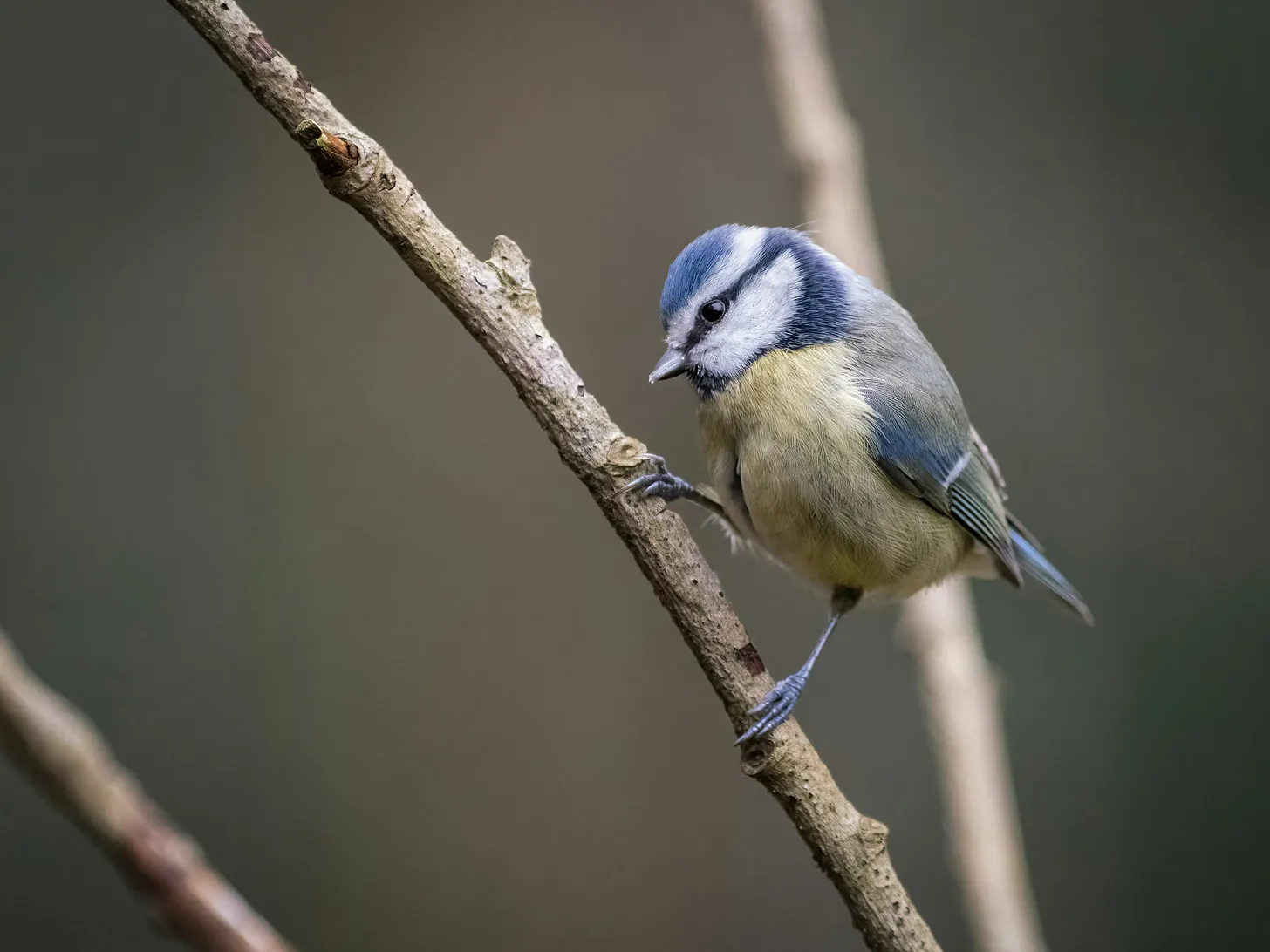 Blue tit. Photo by Doncoombez on Unsplash.
Nord and Nilsson suggest in their publication that this may even provide a potential answer to a long-disputed phenomenon: birds tend to produce larger clutch sizes at higher altitudes and higher latitudes. Maybe it’s because birds in these regions have a lower risk of overheating when feeding their numerous nestlings.
What I wonder after learning about this is: with global warming, will clutch sizes evolve to become smaller as bird parents around the world struggle to feed large broods in increasingly high temperatures?
Join my mailing list to receive new blog posts directly in your inbox:
-
Nilsson, J. Å., & Nord, A. (2018). Testing the heat dissipation limit theory in a breeding passerine. Proceedings of the Royal Society B: Biological Sciences, 285(1878), 20180652. ↩︎
-
The clutches of these birds had been experimentally increased by adding three or four eggs to the original clutch. ↩︎
-
Nord, A., & Nilsson, J. Å. (2019). Heat dissipation rate constrains reproductive investment in a wild bird. Functional Ecology, 33(2), 250-259. ↩︎