Fireworks drive birds into panic flights
Maja Mielke
Think twice before shooting your fireworks into the air.
Estimates suggest that we blow up about $2.5 billion worth of fireworks every year1. Two point five billion dollars*!* Fireworks are a crucial part of New Year’s celebrations around the world, but they are increasingly criticized for posing serious threats to humans, nature, and wildlife—from air pollution and toxic waste to severe injuries, just to name a few.
I wanted to know what science tells us about the effects of fireworks on birds in particular, and I found interesting studies conducted in the Netherlands2. This small European country is one of the most important winter staging areas for waterfowl, with millions of geese resting in nature conservation areas. At the same time, it is one of Europe’s countries with the highest firework import rates. Only 3.8% of the EU population lives in the Netherlands, yet the country accounts for 22% of the fireworks imported into the EU. Every New Year’s Eve, millions of kilograms of fireworks are set off.
The researchers discovered that the effect of fireworks on bird communities is immense. Over several years, they monitored the Dutch airspace on New Year’s Eve via weather radars to measure how many birds were in flight. They found that during the last night of the year, around 1,000 (!) times more birds are in flight than usual. Shortly after midnight, thousands of birds take off, staying aloft for up to an hour and flying several kilometers at heights of around 500 meters before settling again.
Video source: Hoekstra et al. (2024). Creative Commons Attribution License.
To make things worse, it is especially difficult for birds in the Netherlands to escape the inferno. The country is densely populated, with nature reserves lying close to urban areas. In the study area, 62% of the birds resting on the ground were located within just 2.5 km of fireworks.
Fireworks do much more harm to birds than just disrupting their sleep. The birds panic; they become disoriented, struggle to find their way through the emerging smog, and expend precious energy reserves. And that’s not even considering the toxic chemicals that end up in the air they breathe and the water they drink.
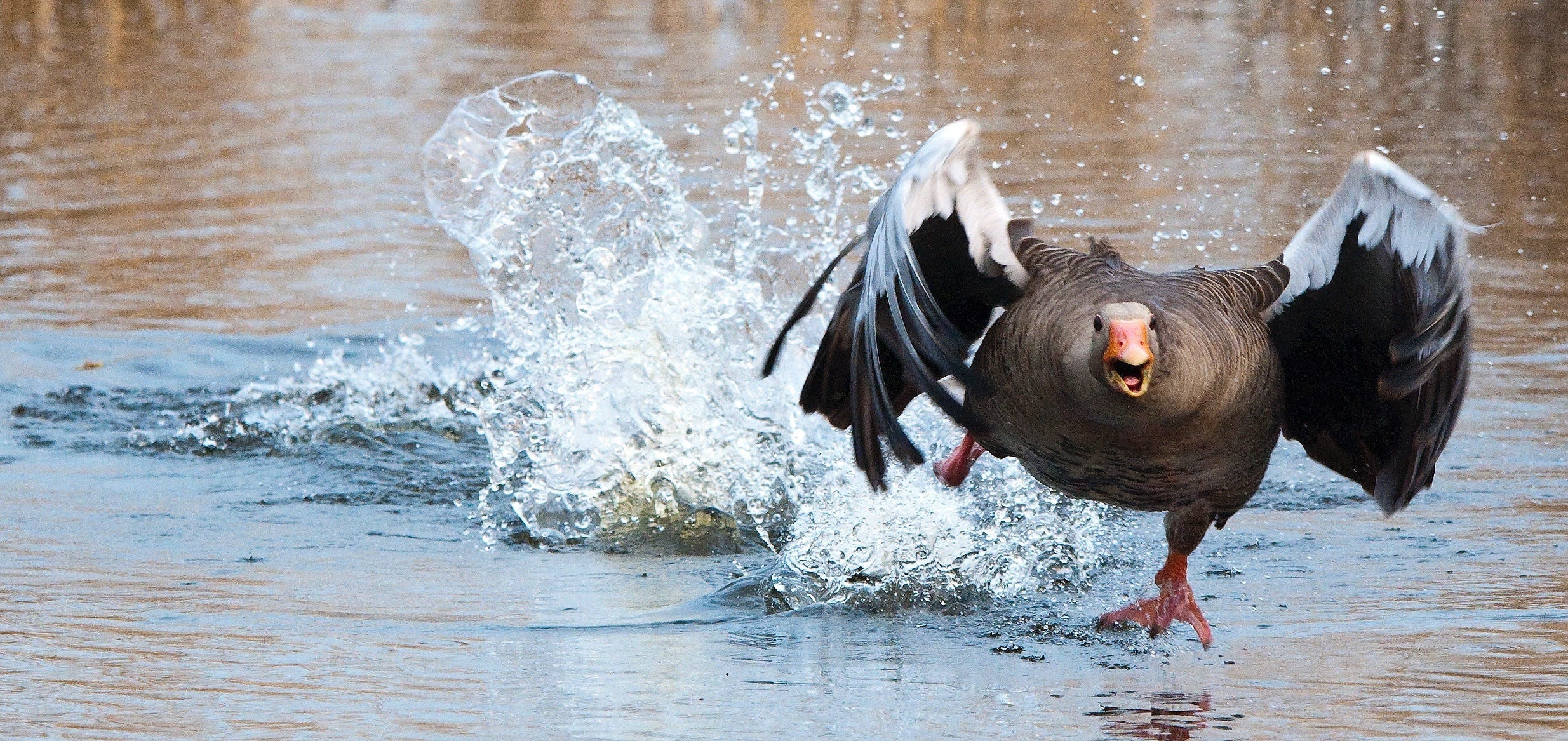 Large waterfowl like this Greylag goose are among the birds affected most. Image by Domenic Hoffmann from Pixabay.
I was glad to learn that the Netherlands is now tightening its fireworks regulations. Nineteen municipalities have already banned fireworks for this year’s New Year’s Eve celebrations, including Amsterdam and Rotterdam, the country’s two largest cities. Next year, a nationwide ban on consumer fireworks will likely be implemented. That’s great news for the birds!
How do you celebrate New Year’s Eve? Would you like to join me in starting the new year in a bird-friendly way? Let’s celebrate peacefully—and not turn this special night into a hell on earth for all the wonderful wildlife around us.
Join my mailing list to receive new blog posts directly in your inbox:
-
https://dynamicfireworks.co.uk/b/how-many-fireworks-are-used-each-year ↩︎
-
Shamoun-Baranes, J., Dokter, A. M., van Gasteren, H., van Loon, E. E., Leijnse, H., & Bouten, W. (2011). Birds flee en mass from New Year’s Eve fireworks. Behavioral Ecology, 22(6), 1173-1177.; Hoekstra, B., Bouten, W., Dokter, A., van Gasteren, H., van Turnhout, C., Kranstauber, B., … & Shamoun‐Baranes, J. (2024). Fireworks disturbance across bird communities. Frontiers in Ecology and the Environment, 22(1), e2694. ↩︎